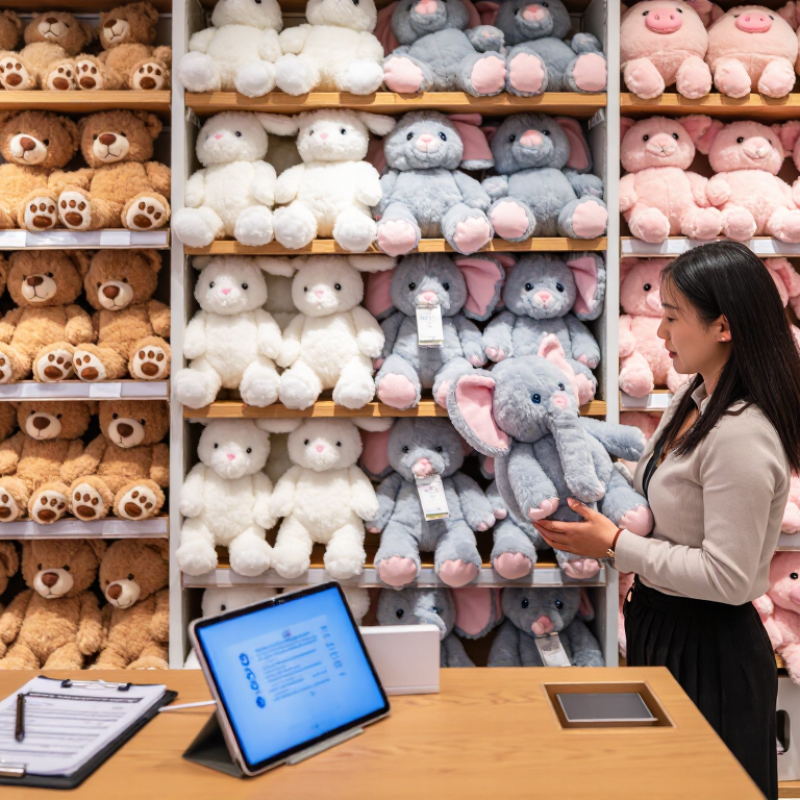
2026 Best Plush Toy Suppliers What Should Retailers Consider?

Time:2026-10-23 Author:Ethan
0%

Choosing the right plush toy supplier can shape a retailer’s reputation, margins, and customer trust in 2026. Soft textures, friendly faces, and reliable stitching matter, but appearance alone cannot prove quality. A supplier’s sample may look excellent under showroom lights, yet perform poorly after repeated washing or rough handling.

So, what should retailers consider when selecting plush toy suppliers? They should examine material specifications, production experience, quality-control procedures, safety documentation, and supply-chain traceability. Clear records matter. Retailers should request recent samples, inspect seams, test stuffing recovery, and review labeling requirements for each target market. Independent testing can provide stronger evidence than a supplier’s brochure, especially for products intended for children.

Practical service also deserves close attention. Buyers should compare minimum order quantities, lead times, packaging options, customization support, and communication speed. A dependable supplier should explain defects openly and offer a realistic solution. Not every attractive quote is truly economical. Hidden delays, inconsistent colors, or weak after-sales support can erase the initial savings.

Experience helps, but it can also create assumptions. A long-standing factory may still need closer monitoring for a new design. Smaller suppliers may offer flexibility, but their capacity requires careful verification. Retailers should balance creativity, compliance, reliability, and cost rather than trusting one impressive meeting. The best partnership is built through documented checks, honest conversations, and repeatable results. Even then, review should never stop.

2026 Best Plush Toy Suppliers What Should Retailers Consider?

What Defines a High-Quality Plush Toy Supplier in 2026?

A high-quality plush toy supplier in 2026 must offer more than attractive samples. Grand View Research estimates the global plush toys market reached about USD 10.6 billion in 2023, with continued growth expected through 2030. This expansion increases pressure on suppliers to prove consistency, not just creativity. Retailers should request material specifications, production records, and batch-level quality reports. Soft fabric should feel even, stitching should resist pulling, and filling should remain evenly distributed after repeated handling.

Safety evidence matters. Suppliers should provide testing against relevant toy safety requirements, including flammability, small parts, heavy metals, and mechanical hazards. The U.S. Consumer Product Safety Commission continues to report recalls involving detachable components and unsafe materials. A responsible supplier explains test scope and laboratory competence clearly. Vague certificates are warning signs. Factory visits, independent inspections, and sample retention can expose weaknesses that polished catalogues hide. My experience suggests one sample is never enough; production variation often appears later.

Tips: Ask for three pre-production samples. Check seams, odor, embroidery, and package labeling. Require a corrective-action process. Review social-compliance evidence, too. Seductive designs can still fail.

Retailers should also examine forecasting and communication. A supplier that confirms lead times, minimum order quantities, and replacement procedures in writing is easier to manage. Yet even experienced teams can overlook color changes between fabric batches. Build approval checkpoints into every order, and document decisions with dated photographs.

2026 Best Plush Toy Suppliers: What Should Retailers Consider? — What Defines a High-Quality Plush Toy Supplier in 2026?

Evaluation Dimension Relevant Market 2026 Acceptance Benchmark Evidence Retailers Should Request Priority
Product Safety Compliance United States Products must be designed and tested against the applicable requirements of ASTM F963. Children’s products also require conformity documentation and tracking information under applicable consumer-product regulations. Recent third-party laboratory report, Children’s Product Certificate, product specification, age grading, and tracking-label artwork. Mandatory
Lead Content Control United States Accessible component parts of children’s products must generally contain no more than 100 ppm total lead. Material-level test reports covering fabric prints, plastic eyes, nose components, thread, accessories, and metal parts. Mandatory
Phthalate Control United States Specified children’s products must generally keep each regulated phthalate at or below 0.1% by weight in accessible plasticized components. Phthalate test results for PVC, coatings, synthetic leather, soft plastic accessories, and printed or coated materials. Mandatory
European Toy Safety Testing European Union The applicable EN 71 series should be addressed, including mechanical and physical properties, flammability, and migration of certain elements. CE technical documentation is required for compliant products. EN 71 test reports, EU Declaration of Conformity, technical file index, risk assessment, and CE marking artwork. Mandatory
International Market Coverage Multiple export markets A capable supplier should map product requirements to the destination market rather than rely on one generic safety report. ISO 8124 may support international toy-safety evaluation where applicable. Market-by-market compliance matrix showing test scope, report validity, age grade, labeling rules, and responsible-party requirements. High
Flammability Performance United States, European Union, and other regulated markets Fabric, plush pile, stuffing, clothing, and accessories should be evaluated under the applicable destination-market flammability requirements. No untreated material should be accepted solely on supplier declaration. Flammability report identifying each tested material, construction, test method, sample condition, and pass/fail result. Mandatory
Seam and Attachment Strength All markets Seams, embroidered features, eyes, noses, ribbons, and other attachments should withstand the applicable mechanical and abuse tests for the intended age grade. Infant and toddler products require especially conservative design controls. Internal construction standard, seam-strength records, pull-test results, abuse-test results, and approved construction samples. High
Material and Filling Control All markets Fabric composition, filling type, dyes, coatings, and trims should remain consistent with the approved sample and bill of materials. Recycled or reclaimed filling should be traceable to a defined specification. Bill of materials, fabric composition records, filling specification, lot traceability, restricted-substance declaration, and incoming inspection records. High
Quality Inspection System All markets Use a documented inspection plan with clearly defined critical, major, and minor defects. A commonly used commercial sampling reference is ANSI/ASQ Z1.4, with the selected AQL and inspection level agreed before production. Pre-production, during-production, and final-inspection checklists; defect classification; sampling plan; corrective-action reports; and inspection photographs. High
Color and Appearance Consistency All markets Bulk production should match the approved color standard, artwork, embroidery, pile direction, proportions, and facial expression. Colorfastness should be evaluated using an applicable textile method such as the ISO 105 series. Signed golden sample, approved color standard, pre-production sample, colorfastness report, artwork approval sheet, and tolerance chart. High
Production Capacity and Lead Time Seasonal and year-round retail For planning purposes, many custom plush programs require approximately 30–60 days for bulk production after sample and material approval, excluding development, testing, transport, and customs clearance. The supplier should provide capacity by month rather than an unsupported maximum figure. Capacity plan, production schedule, critical-path timeline, material lead times, overtime policy, and on-time delivery records from comparable orders. Commercial
Minimum Order Quantity and Replenishment Retail and e-commerce A strong supplier should disclose separate minimums for development, custom materials, first production, and repeat orders. Reorder terms should be documented rather than assumed to match the initial order. Written MOQ schedule, sample charges, tooling or setup costs, repeat-order policy, price breaks, and inventory-holding options. Commercial
Traceability and Recall Readiness All regulated markets Every production lot should be traceable to the factory, production date, material lots, inspection records, and shipment documents. Records should be retrievable quickly during a complaint or recall investigation. Lot-code system, production records, shipment mapping, retention policy, complaint procedure, and documented mock-recall results. Mandatory
Ethical and Environmental Controls Global retail supply chains Supplier evaluation should cover worker safety, working hours, forced-labor risk, chemical management, wastewater controls, packaging materials, and waste handling. Certifications should be verified for scope and validity. Social-compliance audit, code of conduct, environmental policy, chemical-management records, certification scope, and corrective-action history. High
Communication and Documentation All markets The supplier should provide a single controlled document set covering specifications, revisions, approvals, test reports, packaging, labeling, and shipment status. Changes should require written approval before implementation. Document-control procedure, response-time standard, change-request form, weekly production updates, and sample approval workflow. High

Regulatory thresholds and standards should always be confirmed against the latest requirements of the destination market, product age grade, materials, and intended use before purchase or sale.

Which Product Features Should Retailers Evaluate Before Ordering?

Retailers should evaluate plush toys beyond color and character appeal. Fortune Business Insights’ 2024 report estimates the global stuffed-toy market at over 10 billion U.S. dollars. That growth increases competition on crowded shelves. Product details now influence repeat purchases.

Start with the fabric. Check softness, fiber shedding, odor, colorfastness, and resistance to pilling. Run a small wash test. Some fabrics feel luxurious initially but become rough after one cycle. Stitching also deserves close inspection. Pull the ears, limbs, and seams by hand. Loose threads reveal weak production control. The fill should remain evenly distributed, without hard lumps or empty corners. Check the toy’s standing position too. Poor balance can reduce display appeal.

Ask suppliers for documented testing against applicable requirements, including ASTM F963 or EN 71. Verify age grading, small-part risks, seam strength, and flammability results. Do not accept a generic certificate without matching product numbers. Packaging should show care instructions, material details, and traceable batch information. According to the U.S. Consumer Product Safety Commission’s 2023 annual report, recalls and corrective actions still frequently involve children’s products with detachable components. That makes attachment quality essential.

Retailers should also compare size consistency across samples. A six-inch toy should not arrive as five inches. Measure several units from different cartons. I once treated a single perfect sample as proof of stable production. That was careless. Supplier evaluation needs repeated sampling, clear tolerances, and honest discussion about defects. Perfect plush toys are unlikely. Predictable quality is the practical target.

How to use this chart: Before placing an order, retailers should request documented evidence for each product feature. The values represent the number of practical evidence items shown in the purchasing checklist, including test reports, specifications, samples, labels, and production records.

How Can Retailers Assess Supplier Quality, Safety, and Compliance?

Choosing the best plush toy supplier requires more than checking fabric samples. Retailers should inspect production records, safety testing, and shipment controls. The U.S. Consumer Product Safety Commission reported about 231,200 toy-related injuries among children under 15 in 2023. This figure makes supplier verification a practical duty, not paperwork.

Ask for current test reports from laboratories accredited to ISO/IEC 17025. Reports should match the exact product, materials, age grading, and production batch. Check seam strength, small-part risks, flammability, stuffing cleanliness, and restricted substances. Requirements may include ASTM F963 and CPSIA rules for the United States, or EN 71 standards for European sales. Do not accept a generic certificate. Compare its test date, factory address, sample code, and laboratory details. The OECD’s Due Diligence Guidance stresses traceability and documented risk controls across supply chains. Still, documents can hide weak inspections. A factory may pass one sample and miss defects later.

Tips: Request random pre-shipment samples, not handpicked pieces. Visit the factory or hire an independent auditor. Keep photographs of carton labels, stitching, and inner filling. Verify corrective actions after every failed inspection. Leave a small reserve budget for repeat testing. That cost feels inconvenient, but one overlooked loose eye or exposed thread can damage customer trust. Retailers should also review complaint data monthly and question unusually perfect records. Silence is not proof of quality.

What Should Retailers Compare in Pricing, Minimum Orders, and Logistics?

Choosing among the best plush toy suppliers in 2026 requires more than comparing unit prices. Retailers should request a full quotation showing materials, embroidery, packaging, sampling, and shipping costs. A low factory price can become expensive after freight, inspection, and storage fees. Compare landed costs instead.

Minimum order quantities also deserve careful attention. A supplier offering 5,000 pieces may provide better pricing, but that stock can strain cash flow. Smaller trial orders reduce risk, especially for new designs. Ask whether mixed colors or characters count toward the same MOQ. Clarify sample charges and mold fees before approval. Small details matter.

Tips: Build a comparison sheet with price breaks, production days, payment terms, and defect policies. Request a physical sample, not only digital images. Check stitching strength, stuffing recovery, seams, and labels. Ask for safety test documentation suitable for your target market. Also confirm carton dimensions, pallet limits, shipping terms, tracking, and backup plans for delays.

Reliable logistics require clear communication. Set milestones for artwork approval, sample confirmation, production, inspection, and dispatch. A supplier should explain what happens when materials arrive late. The perfect supplier rarely exists. I would rather choose a transparent partner with realistic lead times than accept a beautiful promise. Forecasts can also be wrong, so leave room for seasonal demand changes.

How Can Retailers Choose the Right Supplier for Long-Term Growth?

Choosing a plush toy supplier for long-term growth requires more than comparing prices. Retailers should examine product quality, production stability, and communication habits. Request physical samples and inspect stitching, fabric softness, filling, seams, and small details. A toy may look attractive online but feel disappointing in a child’s hands.

Ask about material traceability, safety testing, factory audits, and quality-control records. Reliable suppliers should explain lead times, minimum order quantities, packaging options, and defect handling clearly. Their answers should remain consistent across sales and production teams. Capacity also matters. A supplier that handles a small order well may struggle during seasonal demand. Your forecast may be wrong, too. Choose a partner willing to discuss adjustments instead of forcing unrealistic commitments.

Tips: Build a simple supplier scorecard. Include quality, response time, pricing, flexibility, and delivery accuracy. Test one small order before expanding. Track defects with photos and dates. Review performance every quarter. Do not ignore communication delays; they often become costly problems later. No supplier scores perfectly. Retailers should identify manageable weaknesses and decide whether improvement is realistic. A cheaper quote can still damage growth through returns, missed launches, or inconsistent quality. Long-term value comes from dependable cooperation, transparent records, and steady product improvement.

FAQS

What fabric qualities should retailers inspect before ordering plush toys?

Check softness, fiber shedding, odor, colorfastness, and pilling resistance. Wash one sample. Some fabric feels premium, then turns rough.

How can retailers test stitching and attachment quality?

Gently pull ears, limbs, and seams by hand. Loose threads suggest weak control. Small attachments need especially careful inspection.

What should retailers check inside the toy?

The filling should stay even, without hard lumps or empty corners. Press several areas. Uneven filling looks poor on shelves.

Why does size consistency matter?

Measure several toys from different cartons. A listed six-inch toy should not arrive five inches. One perfect sample proves little.

What safety documents should suppliers provide?

Request product-specific testing records, age guidance, seam-strength results, flammability information, and small-part evaluations. Generic paperwork is not enough.

What information should appear on the packaging?

Packaging should include care instructions, material details, age guidance, and traceable batch information. Clear labels help manage later questions.

How should retailers evaluate a supplier for long-term cooperation?

Review quality, response time, pricing, flexibility, capacity, and delivery accuracy. Ask the sales and production teams identical questions.

What is a practical way to test a new supplier?

Place a small trial order before expanding. Record defects with photos and dates. Review performance quarterly. My earlier assumption was careless.

Conclusion

Choosing the best plush toy supplier in 2026 requires retailers to look beyond attractive designs and low prices. The key question is what should retailers consider when selecting plush toy suppliers? Important factors include product quality, softness, durability, stitching strength, filling materials, washable construction, and age-appropriate design. Retailers should also review safety testing, material transparency, production consistency, and compliance documentation to reduce product risks and protect customer trust.

Commercial terms are equally important. Retailers should compare unit pricing, minimum order quantities, sampling options, customization flexibility, production lead times, packaging, shipping arrangements, and communication efficiency. A dependable supplier should provide realistic delivery schedules, stable quality control, responsive service, and the ability to scale as demand grows. By evaluating products, safety standards, costs, logistics, and long-term cooperation potential together, retailers can select a reliable partner that supports sustainable sales growth and builds a stronger plush toy assortment.

Ethan

Ethan

Ethan is a seasoned marketing professional with a deep expertise in our company's innovative product line. With a passion for sharing knowledge and insights, he takes the lead in regularly updating our corporate blog, where he explores industry trends, product features, and effective marketing......