Tazz Toy
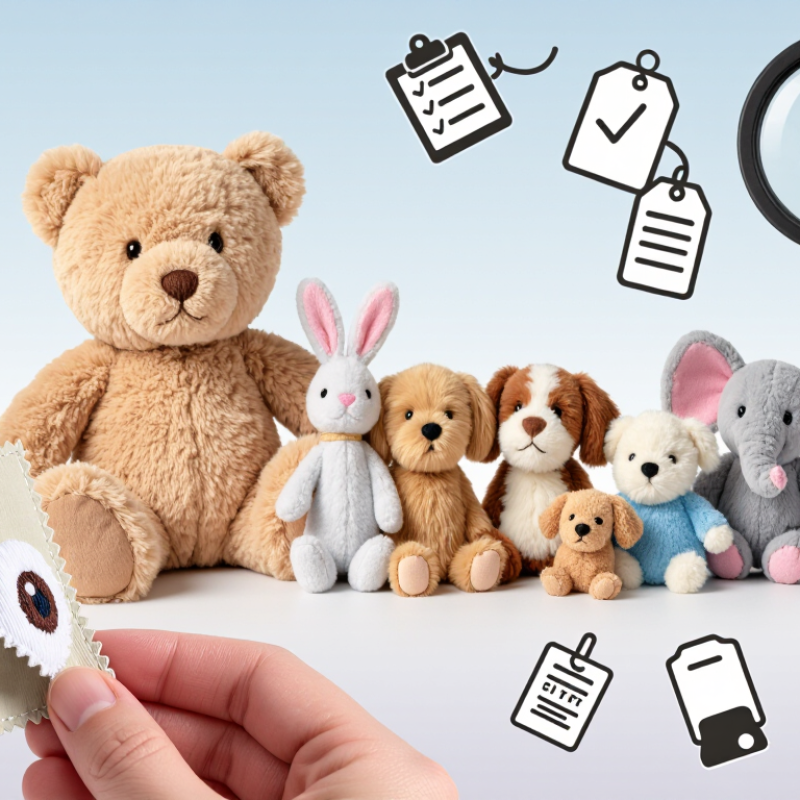
Importing plush toys in 2026 requires more than comparing factory prices. Distributors must examine materials, stitching, labeling, packaging, testing, and delivery records. A soft teddy bear may look harmless, yet loose eyes, accessible filling, or flammable fabric can create serious risks.
So, what should distributors know before importing plush toys? They should verify the supplier’s experience, factory controls, sample approval process, and documented safety testing. Request production samples, not only polished showroom pieces. Check seams by hand. Pull the embroidered details. Measure the filling after washing. Small defects often reveal larger process problems.
Joan Lawrence, a recognized toy-safety specialist, has stated, “Safety is a shared responsibility.” That principle should guide every purchasing decision. Distributors need clear specifications and traceable records before confirming large orders. They should also review age grading, warning labels, chemical requirements, and destination-market standards with qualified compliance professionals.
Costs can change unexpectedly. Freight delays happen. A cheap quote may exclude testing, packaging changes, or inspection fees. Careful importers calculate the complete landed cost before signing. They also keep communication records, approved samples, and corrective-action plans.
Mistakes still occur.
Even experienced teams can overlook a production variation. A better process allows room for rechecking, questioning, and improving. This guide explores practical steps for safer sourcing, stronger supplier evaluation, and more dependable plush-toy distribution in 2026.
For 2026 plush toy imports, market research should guide every product decision. Grand View Research valued the global stuffed toys market at about USD 7.3 billion in 2023. It also forecasts steady growth through 2030. However, definitions differ across research companies. Forecasts are not facts.
Compare sales data from local marketplaces, toy stores, and seasonal buying reports. Look for repeatable demand, not one viral character. Check price bands, preferred sizes, colors, and gifting periods. A 20-centimeter plush may suit impulse purchases, while larger designs need stronger shelf space and packaging. Review stitching, fabric softness, filling recovery, washable surfaces, and odor after opening. Request independent safety and material test reports before placing a bulk order.
Tip: Build a small test range first. Three designs can reveal more than one large shipment. Track click rates, customer comments, return reasons, and sell-through within 30 days. I once underestimated packaging volume; freight costs changed the product’s real margin. That mistake still matters.
Tip: Select products by customer use, not appearance alone. Parents may value washable fabric, secure seams, and clear age guidance. Collect samples from different production batches. Inspect loose threads, uneven embroidery, and compressed filling. The International Trade Centre recommends using trade statistics carefully because product categories can combine different toy types. That limitation deserves attention. A beautiful sample may not represent consistent factory output. Use conservative forecasts, documented inspections, and a reorder plan with realistic lead times.
2026 Top Tips for Distributors Importing Plush Toys
Supplier verification should go beyond a polished website and fast replies. Ask for the factory’s legal registration, production address, ownership details, and export history. Confirm that the factory actually makes plush toys. Some trading companies outsource every step, which can weaken quality control. Request recent audit records, worker safety evidence, and clear contact details. A video call from the sewing floor can reveal more than a sales presentation.
Order samples before discussing large quantities. Check the fabric under bright light. Pull the eyes, nose, ribbons, and seams by hand. Examine loose threads, uneven stuffing, unpleasant odors, and color transfer after gentle rubbing. Keep one approved sample in your office. It becomes the physical reference during production. Small differences matter.
Ask for material specifications and test reports from qualified laboratories. Review flammability, seam strength, small-part security, colorfastness, and age-related safety requirements for your target market. Reports should match the exact fabric, filling, accessories, and product version. A report with an old production date deserves questions. I once trusted a complete-looking document too quickly. The sample later used a different filling. That mistake taught me to compare every report with the purchase specification and final pre-shipment sample. Third-party inspections can help, but they cannot replace careful supplier communication. (Words: 217)
| Assessment Dimension | Verification Checkpoint | Required Evidence | Recommended Standard or Acceptance Basis | Suggested Frequency | Risk Level |
|---|---|---|---|---|---|
| Supplier legal identity | Confirm the legal entity, registered address, manufacturing location, ownership, and export authorization. | Current business registration, factory address, production-license information where applicable, and bank-account consistency. | All commercial documents should identify the same legal entity and physical production site. Do not rely only on an online marketplace profile. | Before approval; recheck annually and after any ownership or address change. | High |
| Production capability | Verify that the proposed site actually performs cutting, sewing, stuffing, assembly, finishing, and packing. | Process-flow chart, equipment list, recent production photographs or video, capacity statement, and subcontractor register. | The factory should demonstrate process control for each operation and disclose any outsourced embroidery, printing, stuffing, or packing activity. | Prequalification and during each major product change. | Medium |
| Destination-market compliance | Match the product, age grade, materials, labels, and test plan to the destination country. | Written compliance matrix listing applicable legal requirements for each destination market. | Typical references include ASTM F963 and applicable U.S. federal toy rules, EN 71 for the European market, ISO 8124 where contractually requested, REACH chemical restrictions, and the relevant UK or Canadian toy-safety rules. | Before sampling, before production, and whenever regulations or materials change. | Critical |
| Laboratory test validity | Check whether the report covers the exact product, age grade, color, materials, components, and intended market. | Complete test report showing sample description, production or sample date, test methods, results, deviations, and laboratory accreditation details. | Prefer reports issued by a laboratory accredited to ISO/IEC 17025 for the relevant test methods. A report for a similar item is not proof of conformity for a different product. | For every new design or material; repeat after significant changes or when report age is no longer accepted by the buyer or regulator. | Critical |
| Mechanical and physical safety | Inspect seams, embroidery, eyes, noses, ribbons, cords, decorative parts, and any detachable component for foreseeable-use hazards. | Mechanical and physical test results, approved golden sample, construction specifications, and corrective-action records. | No accessible sharp points or edges, hazardous loose parts, unsafe cords, or openings that could expose stuffing during reasonably foreseeable use. Apply the destination-market toy standard and age-grade requirements. | Sample approval, first production run, and every production inspection. | Critical |
| Flammability performance | Confirm that outer fabric, pile, stuffing, trims, and accessory materials are represented in the test sample. | Flammability test report linked to the final bill of materials and the approved product version. | The product must meet the flammability requirements applicable to the destination market and toy category. Results should not be transferred to a materially different construction without technical review. | New material or construction; repeat after any change to fabric, pile, filling, coating, or finish. | High |
| Chemical and material safety | Evaluate dyes, coatings, printed surfaces, plastic parts, metal accessories, adhesives, and packaging contact materials. | Material declarations, restricted-substance test results, supplier declarations, and an updated bill of materials. | Assess applicable limits under destination-market rules, including REACH restrictions or SVHC communication duties where relevant. Test based on material and risk rather than using one generic report for every style. | At material approval and after changes in supplier, colorant, coating, adhesive, or component source. | High |
| Stuffing and hygiene control | Check filling cleanliness, foreign-material prevention, moisture control, odor, and protection during storage and shipment. | Stuffing-material specification, incoming inspection records, needle-control procedure, cleaning records, and pest-control records. | Filling should be clean, dry, free from visible foreign matter and abnormal odor, and enclosed by secure seams. Define any customer-specific fiber, recycled-content, or allergen declarations in the product specification. | Every incoming stuffing lot and every finished-goods inspection. | Medium |
| Labeling and traceability | Verify age grading, warnings, fiber or material information, care instructions, importer details, country-of-origin requirements, and lot identification. | Approved artwork, label specification, packaging proof, carton-marking standard, and lot-code sample. | Information must be accurate, legible, durable, placed where required, and consistent with the compliance file. Each shipment should be traceable to a production lot and relevant raw-material records. | Artwork approval and every production inspection. | High |
| Final inspection sampling | Use a documented sampling plan to assess appearance, dimensions, workmanship, function, packaging, labeling, and safety-critical defects. | Inspection report showing lot size, sample size, defect classification, photographs, measurements, and disposition. | ISO 2859-1 may be used as the sampling framework. A common commercial example is AQL 0 for critical defects, 2.5 for major defects, and 4.0 for minor defects, but the buyer must define the plan contractually and should not treat AQL as a permitted defect rate. | When production is substantially complete and at least 80% is packed, before shipment release. | Medium |
| Corrective action and change control | Confirm that defects, material substitutions, tooling changes, and process deviations are recorded and approved before shipment. | Corrective-action report with root cause, containment, responsible person, completion date, verification evidence, and revised documents where applicable. | No unapproved substitution of fabric, filling, thread, trim, adhesive, packaging, or production site. Significant changes require a documented compliance and risk review. | For every nonconformity and before each repeat order involving a design or material change. | Medium |
| Shipment and document release | Release goods only after inspection, compliance documents, packing details, and shipping records are reconciled. | Approved inspection report, packing list, commercial invoice, carton photographs, compliance file, and shipment lot records. | Product description, quantities, carton marks, labels, lot codes, and documents must match the approved order and compliance scope. Hold shipment when a critical defect or unresolved compliance gap exists. | Every shipment. | High |
For 2026, plush toy distributors should treat safety testing as a purchasing decision, not a final paperwork task. Request samples before placing a large order. Check stitching, seams, eyes, noses, filling, and small attached parts. Pulling and tension tests can reveal risks that look harmless during visual inspection. Flammability, material composition, and age grading may also require laboratory evaluation. Use an accredited testing laboratory familiar with the destination market. Requirements can differ by country, product design, and intended age.
Tips: Keep a test report for every distinct toy design. Confirm that the report matches the production materials. Ask for updated documents after changing fabric, filling, accessories, or packaging. Do not rely on a supplier’s old certificate. It may describe another batch.
Labels need equal attention. Mark the importer’s identity, product information, fiber or material content, care instructions, and required warnings clearly. Use the destination market’s language rules. Make tracking details readable on the toy, hangtag, or packaging. A label hidden under a ribbon is not useful. One overlooked warning can delay customs clearance or force costly relabeling. In practice, teams sometimes approve attractive packaging too quickly. That is where mistakes begin. Build a simple checklist, review one physical sample, and record who approved each requirement. Safety work is not perfect, but careful evidence makes corrections faster.
2026 Top Tips for Distributors Importing Plush Toys
Shipping plans should start with carton measurements, not product quantity alone. Plush toys compress differently, so shipping volume can exceed the factory estimate. Ask for carton length, width, height, gross weight, and packing photos. Compare sea, rail, air, and multimodal options against your sales deadline. My early freight estimates were too optimistic because I ignored peak-season space shortages.
Tip: Request a freight quotation with every surcharge listed. Check handling fees, documentation charges, port storage, delivery appointments, and cargo insurance. Confirm the agreed Incoterm in writing. A low transport quote can hide expensive destination costs. Build a small buffer for delays.
Customs clearance depends on accurate product descriptions, tariff classification, declared value, origin details, and required safety documents. Do not describe goods simply as “toys.” State the materials, filling, intended age group, and packaging details. Ask a qualified customs broker to review the classification before shipment. Requirements can differ by destination and may change during the year.
Tip: Prepare a document folder before loading. Include the commercial invoice, packing list, transport document, purchase contract, test reports, and labeling records. Calculate landed cost per unit by adding product cost, freight, insurance, duties, taxes, broker fees, and inland delivery. Recheck the calculation after customs clearance. Small fees often disturb a careful budget.
Shipping, customs clearance, and import cost planning for a 10,000-piece ocean shipment.
This planning benchmark estimates a landed cost of approximately $4.00 per unit from a $3.00 FOB purchase price. Freight, import duty, customs brokerage, and inland delivery should be confirmed with the carrier, customs broker, and destination-country tariff schedule because rates vary by origin, destination, HS classification, shipment volume, and delivery terms.
Reliable inventory control begins before the shipment leaves the factory. Use sales history, seasonal demand, and confirmed retailer orders to build a practical forecast. In my distribution work, I have learned that plush toys can occupy more warehouse space than expected. My early forecasts were too optimistic. Track each style by carton quantity, color, size, and arrival date. A simple weekly dashboard can reveal slow-moving stock before it consumes cash. Keep a small safety stock for proven sellers, but avoid filling shelves with guesses.
Tip 1: Count physical inventory monthly, not only in software. Photograph damaged cartons and record discrepancies immediately.
Pricing needs more than the purchase cost. Include freight, insurance, customs charges, warehouse handling, packaging, and payment fees. Then compare the landed cost with local wholesale prices. A low price may attract retailers, but it can weaken cash flow when returns or delays appear. Test two margin levels with different customer groups. Review the results after four weeks. Some assumptions will fail. That is useful information.
Tip 2: Prepare a clear wholesale sheet with carton prices, suggested retail prices, minimum order quantities, and delivery estimates.
Distributor sales improve when buyers can see products in real settings. Provide sample displays, close-up photos, and short usage ideas for gift shops, children’s stores, and seasonal retailers. Train sales staff to explain softness, filling, stitching, and care instructions accurately. Do not promise demand you cannot support. Follow up after delivery and ask which colors stayed on the shelf. Their answers should influence the next purchase. Stay curious.
Begin before placing a large order. Request physical samples first. Inspect stitching, seams, eyes, noses, filling, and attached parts. Pulling tests may reveal hidden weaknesses. Visual checks alone can miss problems.
Testing may cover flammability, material composition, small parts, and age grading. Requirements vary by destination and product design. Use an accredited laboratory familiar with the target market. The correct test scope is easy to underestimate.
Yes. Keep one report for every distinct design. Confirm the report matches the actual fabric, filling, accessories, and packaging. Request updated documents after any material change. An old certificate may describe another batch.
Labels should show importer identity, product details, material content, care instructions, and required warnings. Use the destination market’s language rules. Keep tracking information readable. A label hidden under a ribbon is not useful.
Create a simple checklist. Review one physical sample before approval. Record who checked each requirement. Attractive packaging can distract people from missing warnings. That happened in practice. Careful evidence makes corrections faster.
Forecast using sales history, seasonal demand, and confirmed retailer orders. Track each style by carton quantity, color, size, and arrival date. Count physical inventory monthly. Photograph damaged cartons immediately. Software can be wrong.
Keep a small reserve for proven sellers. Avoid filling shelves with uncertain products. A weekly dashboard can expose slow-moving stock early. Plush toys may occupy more warehouse space than expected. My early forecasts were too optimistic.
Include purchase cost, freight, insurance, customs charges, warehouse handling, packaging, and payment fees. Calculate the landed cost carefully. Compare it with local wholesale prices. A low price can still damage cash flow.
Provide wholesale sheets with carton prices, suggested retail prices, minimum order quantities, and delivery estimates. Show sample displays and close-up product photos. Explain softness, filling, stitching, and care instructions accurately. Do not promise unsupported demand.
Follow up with retailers after delivery. Ask which colors stayed on shelves. Review returns, delays, and customer reactions. Test different margin levels when useful. Some assumptions will fail. That is still useful information.
Importing plush toys successfully requires careful planning from product selection to final sales. The first step is understanding target customers, seasonal demand, preferred materials, styles, sizes, and price ranges. Distributors should compare suppliers based on production capacity, communication, sample quality, factory conditions, and previous export experience. Clear specifications and quality standards can help reduce defects and ensure consistent products.
A key question is what should distributors know before importing plush toys? They should confirm safety testing, age grading, material documentation, labeling details, and required certifications for each destination market. Importers also need to estimate shipping, customs processing, duties, insurance, warehousing, and other costs before placing an order. After arrival, effective inventory control can prevent overstocking and shortages. Finally, distributors should set prices according to total landed cost, market demand, product quality, and sales channels while using promotions and reliable customer service to support long-term growth.