Custom plush toy design gives a business a physical way to make its story recognizable. A soft character can appear in a store display, welcome kit, product launch, or customer gift. Its color, shape, fabric, and expression should connect clearly to the brand—not simply look cute.
Industry data suggests there is room for thoughtful ideas. Grand View Research estimated the global stuffed and plush toys market at about US$10.3 billion in 2023, with continued growth projected through 2030. Circana also reported that toy sales increased 4% across 12 global markets in 2024. These figures describe broad categories, not a guarantee that any custom product will sell. Still, they show why businesses are exploring plush products as part of wider merchandise and gifting strategies.
The practical question is how to design custom plush toys for your business without losing sight of cost, quality, and purpose. Start with a clear audience and use case. A compact mascot for conference bags needs different proportions and materials than a large retail collectible. Then consider sample reviews, stitching, fabric feel, packaging, and production quantities. Details matter. A smile that looks friendly on a screen may feel wrong when stitched onto a small face. Brand teams should expect revisions, and sometimes the first sample misses the mark. That is useful feedback, not failure. This guide explains the design decisions that help turn an idea into a plush product people can recognize, hold, and remember.
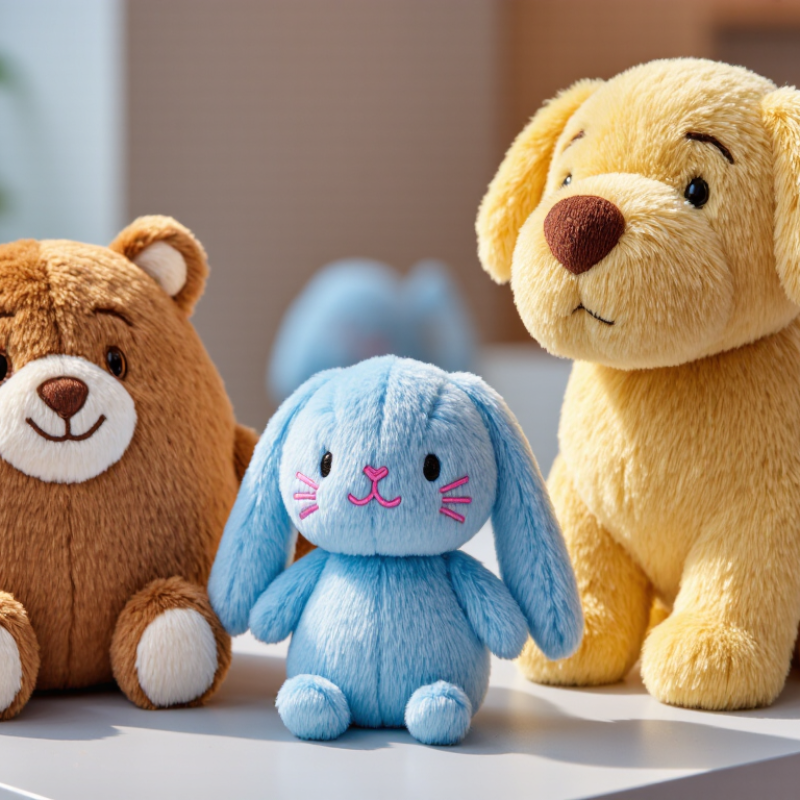
What Custom Plush Toy Design Means for a Business
Custom plush toy design for a business means creating a soft toy for a specific commercial purpose, rather than simply adding a logo to an off-the-shelf animal. The toy might represent a mascot, product feature, service, or campaign. Its shape, fabric, colors, facial details, size, and packaging all influence recognition, cost, and how it feels in a customer’s hands. Small details matter.
A useful design brief identifies the intended audience, order quantity, budget, and where the toy will be used. A prototype can reveal issues that sketches miss, such as a face that looks different when stitched or a body that tips over when seated. Check seams, fabric feel, proportions, and color consistency before approving production. Not every idea works. Revising a sample is normal, and sometimes the first concept needs rethinking.
Tips: Keep important features simple enough to reproduce consistently. Request a physical sample, compare it with your approved artwork, and ask what may change between sampling and production. Record agreed measurements and materials. Details can still be overlooked.
Market Context: Circana Valued U.S. Toy Sales at $40.2 Billion in 2023
In 2023, Circana valued U.S. toy sales at $40.2 billion. That figure covers the wider toy market, not plush toys alone. It offers useful context for businesses considering a custom plush toy, but it does not guarantee demand for any single product. Buyers still weigh price, appeal, and usefulness. A soft character with embroidered features may suit a gift shop, while a small, durable mascot could work better for events or customer giveaways.
Design decisions affect both cost and customer experience. A paper sketch can establish the character’s shape, colors, and key details. Then a physical sample helps reveal issues that drawings miss, such as floppy limbs or features that look too small. Details matter. Businesses should also ask suppliers about material specifications, stitching, production timelines, and applicable product testing. These checks help teams make informed choices, though they cannot remove every risk.
A realistic budget includes more than the sample and unit price. Packaging, shipping, revisions, and minimum order quantities can change the final cost. It is easy to overdesign a plush toy. Extra accessories may look appealing on screen but add expense without making the product more useful. The $40.2 billion market figure is a starting point for discussion, not a sales forecast; customer feedback and small-scale testing can provide more relevant evidence for a specific design.
What Is Custom Plush Toy Design for Your Business? - Market Context: Circana Valued U.S. Toy Sales at $40.2 Billion in 2023
| Market indicator |
U.S. 2023 figure |
What it may mean for custom plush toy design |
| Total toy sales |
$40.2 billion |
Plush products compete within a large, varied toy market. Define a clear audience and product purpose before choosing a design. |
| Year-over-year toy sales change |
Down 8% from 2022 |
A distinctive concept and well-defined customer need can help a new plush product stand out in a more cautious market. |
| Toy unit sales |
Down 7% year over year |
Consider testing the design and intended price with prospective buyers before committing to a large production run. |
| Average selling price |
Down 1% year over year |
Balance materials, size, features, and production cost so the finished plush offers clear value at its planned price. |
Market figures describe the U.S. toy industry in 2023. The custom-plush considerations are strategic guidance, not measured market statistics.
Design Workflow: Turn Brand Goals into a Specified Plush Prototype
Custom plush design starts with a clear business goal, not a fabric sample. Is the toy meant for a welcome kit, a retail shelf, or an event giveaway? That answer shapes its size, finish, and packaging needs. A useful brief records the intended audience, target dimensions, color references, expression, and any fabric or accessory preferences. For example, a 20-centimeter desk mascot may need a stable base, short-pile fabric, and embroidered eyes that remain clear at a small scale. Small details matter.
Next, convert the brief into a specification that a sample maker can follow. Include front, side, and back sketches, labeled measurements, seam placement, fabric descriptions, and notes on stuffing firmness. Call out features that are easy to misread, such as the angle of an ear or the spacing between eyes. One annotated drawing often prevents several rounds of guesswork.
The first prototype is a working sample, not proof that every detail is solved. Check its proportions by hand, compare colors under ordinary indoor light, and inspect seams where the toy bends or gets handled. The result may feel softer than expected. That is normal. Record each mismatch with a photo and a specific revision, such as “raise the nose 5 millimeters,” rather than “make the face friendlier.”
Production Economics: Plan MOQ, Unit Cost, Sampling, and Freight
What Is Custom Plush Toy Design for Your Business?
Production economics start with the minimum order quantity (MOQ), not just the quoted unit price. A factory may offer a lower price at 1,000 pieces than at 300, but the larger run ties up more cash and inventory. Ask for tiered quotes showing fabric, embroidery, filling, packaging, and any setup charges separately. Then divide total production and freight costs by sellable units to estimate landed cost. Forecasts still miss. A slow colorway can leave boxes sitting in storage.
Tips: Request a sample before approving bulk production. Check its size, stitching, fabric feel, and packaging against your specification. Confirm whether the sample fee is credited toward the order; policies vary. Keep one approved sample as a reference, since small changes can alter both cost and appearance.
Freight deserves its own line in the budget.
UNCTAD’s Review of Maritime Transport 2024 notes that shipping carries over 80% of global trade by volume, while disruptions can affect routes and rates. Get current freight quotes for the shipment’s carton count, dimensions, and destination; a low unit price can be offset by bulky cartons. Compare air and sea options, including delivery time and charges beyond the base rate. Allow room for changes—my first estimate is rarely the final one.
Safety and Quality: Apply ASTM F963 and EN 71 Testing by Market
Custom plush toy design begins with more than choosing fabric, colors, and embroidery. Safety requirements should shape the pattern, materials, and construction from the first sample. A button eye, loose thread, or poorly secured seam can change how a toy performs in testing. Small details matter.
For toys intended for the United States, assess the finished product against the applicable ASTM F963 requirements. For European markets, review the relevant EN 71 parts, including mechanical and physical properties, flammability, and chemical elements. Requirements differ by market and product design, so testing a fabric swatch alone is not enough. Test the finished item.
The U.S. Consumer Product Safety Commission estimated 209,500 toy-related injuries treated in emergency departments in 2022. This figure covers toys broadly, not plush toys alone, but it shows why age grading and physical hazards deserve careful review.
Ask a qualified laboratory to test production-representative samples, including accessories, thread, and surface treatments. Keep the reports with your material records and design revisions. A checklist helps, but it can miss a change made late in sampling. It is worth checking again.
Conclusion
Custom plush toy design helps a business turn its identity, audience, and goals into a tangible product. In a U.S. toy market valued by Circana at $40.2 billion in 2023, a distinctive plush can support promotions, retail offerings, events, or customer engagement. The process begins by defining the toy’s purpose, users, budget, and desired look, then translating those decisions into specifications for size, materials, colors, features, and construction. A prototype allows the concept to be reviewed and refined before production.
Understanding how to design custom plush toys for your business also means planning the practical details early. Compare minimum order quantities and unit costs, budget for sampling, and account for packaging and freight. Safety and quality requirements should be considered for each intended market, including appropriate ASTM F963 or EN 71 testing. Clear specifications, careful sample reviews, and realistic production planning help create a plush product that fits both the business objective and its customers.
 Tazz Toy
