Top Ways Plush Toys Support Emotional Development?

Time:2026-10-18 Author:Oliver
0%

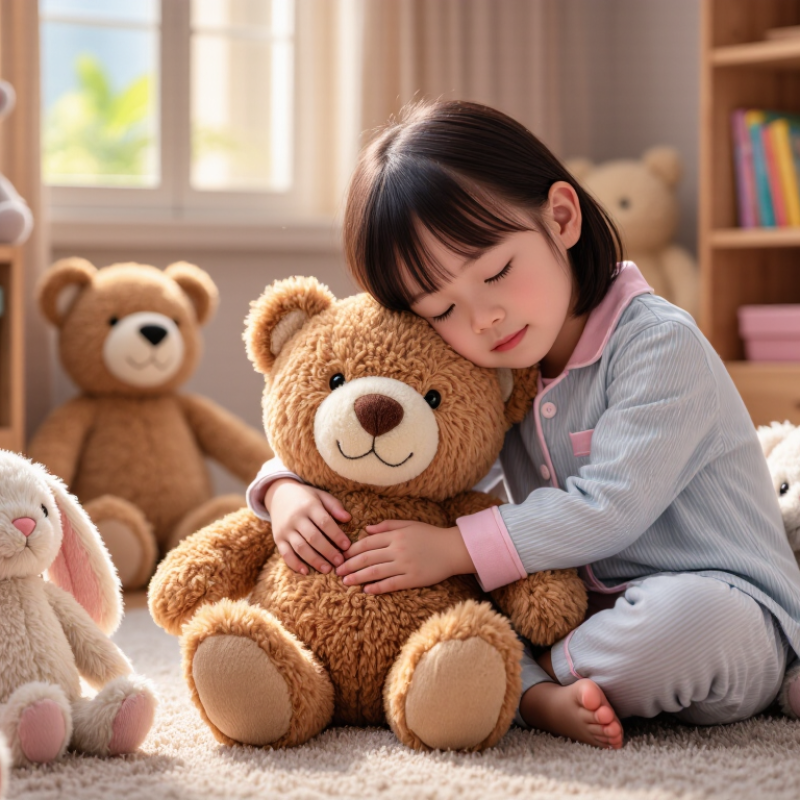
How do plush toys support emotional development? The answer begins with ordinary moments: a child hugs a soft bear after a nightmare, whispers worries to a stuffed rabbit, or carries a familiar toy into a new classroom. These actions can offer comfort, emotional rehearsal, and a safe way to express difficult feelings. The American Academy of Pediatrics’ clinical report, The Power of Play, explains that play supports social-emotional development, stress regulation, and healthy relationships. Plush toys are not therapy by themselves. Their value appears through repeated, caring interactions.

Research from UNICEF and the LEGO Foundation also identifies pretend play as a setting for children to practice empathy, communication, and self-regulation. A plush toy can become a “patient” during pretend medical play or a friend during conflict stories. These small scenes make invisible emotions easier to see. Stuart Brown, founder of the National Institute for Play, famously said, “The opposite of play is not work—the opposite of play is depression.” His statement highlights play’s emotional importance, although it does not prove that every plush toy creates measurable benefits.

Industry reports from Circana and The Toy Association show that plush remains a major toy category, especially among younger children. However, sales data cannot demonstrate emotional outcomes. That distinction matters. A soft texture may calm one child but distract another. Caregivers should observe behavior, model emotional language, and avoid forcing attachment. The following sections examine how plush toys may support comfort, imaginative expression, empathy, routines, and emotional communication, while acknowledging where evidence remains incomplete.

Top Ways Plush Toys Support Emotional Development?

What Plush Toys Are: The Toy Association’s 2024 Soft-Toy Market Data

What Plush Toys Are: The Toy Association’s 2024 Soft-Toy Market Data

Plush toys are soft, fabric-made objects filled with cotton, polyester, or similar materials. The Toy Association’s 2024 soft-toy market data reflects their continuing place in children’s play. Their appeal is practical as well as emotional. A small plush animal can become a bedtime companion, a pretend patient, or a quiet listener. These simple roles give children safe ways to express fear, affection, jealousy, and care.

Child-development specialists often connect pretend play with emotional learning. A child may tuck a toy under a blanket after feeling unsettled. This action can rehearse comfort and self-regulation. Plush toys also support storytelling, which helps children name feelings and practice social responses. However, market popularity does not prove emotional benefits for every child. Some children ignore plush toys completely. Others may rely on them too heavily during stressful changes. Careful observation matters.

Tips: Choose washable toys with secure stitching and age-appropriate features. Invite children to describe the toy’s feelings, rather than correcting their stories. Notice repeated themes, such as loneliness or anger. These themes may offer useful clues, but they are not a diagnosis. Keep the conversation gentle. Avoid forcing attachment.

Comfort Objects and Attachment: Findings from 60 Years of Child Research

Across six decades, child-development research has examined how comfort objects support attachment and emotional growth. Plush toys can provide continuity when children face bedtime, childcare, travel, or family changes. Developmental researchers often describe them as transitional objects. They help children move between dependence and growing independence.

For a tired child, a soft toy can make feelings easier to manage. Its familiar texture, smell, and shape may create a small sense of safety. During pretend play, children may comfort the toy, feed it, or protect it. These actions can rehearse empathy and emotional language. A child might whisper, “Don’t worry,” while processing their own worry. The effect is not magical, and every child responds differently.

Tips: Let the child choose the object. Keep it available during difficult transitions. Ask gentle questions about the toy’s feelings. Avoid forcing attachment. Notice whether the toy encourages play, communication, and calming. Wash it safely, but explain changes in texture or smell before doing so.

Research supports comfort objects, but it does not prove that every plush toy improves development. Temperament, family relationships, and daily experiences matter more. Adults should also watch for distress that continues despite comfort. A toy can support emotional regulation, but it cannot replace responsive caregiving. I have sometimes underestimated how powerful ordinary routines can feel to children. The quiet bedtime hug may matter as much as the object itself.

Emotional Regulation: Pediatric Evidence on Transitional Objects

Plush toys can support emotional development when children use them as transitional objects. Pediatric research links these familiar items with self-soothing during separation, bedtime, and unfamiliar experiences. The toy does not remove distress. It gives distress a manageable shape.

A child may squeeze a soft rabbit before entering preschool, whisper to it during a hospital visit, or place it beside a pillow at night. Repeated sensory details, such as fur, weight, and familiar smell, can create continuity between home and new settings. This may help children tolerate short separations while caregivers remain emotionally available. Evidence suggests an association, not a guaranteed cause. Every child responds differently.

Caregivers can acknowledge the toy without making it compulsory. Saying, “Your bear can stay in your bag,” may offer choice and control. Adults should also name the feeling: “You miss me, and you feel nervous.” That language connects comfort with emotional understanding. A plush toy is not a replacement for responsive caregiving, though adults sometimes expect it to solve distress too quickly. One practical concern is hygiene, especially when the toy travels across floors, clinics, and playgrounds. Washing instructions, secure stitching, and age-appropriate features matter. If a child becomes unable to participate without the toy, a pediatric professional can explore the wider emotional context rather than simply removing it.

Empathy and Social Skills: Research on Pretend Play in Early Childhood

Pretend play with plush toys gives young children a safe way to practise empathy. A child may tuck a toy under a blanket and whisper, “You are scared.” This simple scene lets the child notice feelings, name them, and respond with care. Research on early childhood play often connects this role-playing with emotional understanding and social development. The toy becomes a quiet partner for difficult conversations.

Children also rehearse social skills through shared stories. One child may offer a toy food, while another decides who needs help. They practise taking turns, listening, negotiating, and repairing small disagreements. Educators often observe these skills during unplanned play, not only during structured activities. Plush toys can make social situations less threatening because the child speaks through a character.

Still, pretend play is not automatically beneficial. Some children repeat controlling roles or exclude others from the story. Adults should watch gently and ask open questions, such as, “How could the toy join?” Guidance matters, but too much direction can weaken the child’s imagination. I have seen children reject adult suggestions completely, then create more caring solutions alone. That tension deserves attention. Play reveals growth, but it also reveals confusion, fear, and unfinished social learning.

Safety and Boundaries: AAP Guidance for Children Under 12 Months

Top Ways Plush Toys Support Emotional Development?
Safety and Boundaries: AAP Guidance for Children Under 12 Months

Plush toys can support early emotional development during supervised play. Their soft texture may invite touching, holding, and simple social games. A caregiver might place a washable toy beside a baby during floor time. Then, name it, hide it briefly, and bring it back. These small exchanges encourage attention, anticipation, and shared comfort. However, the American Academy of Pediatrics (AAP) gives a firm safety boundary: babies under 12 months should sleep without plush toys, pillows, blankets, or other soft objects.

Keep the crib empty.

The AAP’s 2022 safe-sleep policy explains that loose items can obstruct breathing. CDC data reports roughly 3,400 sleep-related infant deaths each year in the United States. This figure includes sudden unexpected infant deaths, so caregivers should avoid treating a toy as harmless decoration. Use plush items only when an adult is actively watching. Check seams, eyes, and filling before every session. A loose thread can become a mouth hazard. Choose toys that are too large to fit completely in a baby’s mouth, and remove them when play ends. The Consumer Product Safety Commission also advises attention to small parts and accessible stuffing.

The difficult part is emotional. A baby may reach for a favorite toy at bedtime. Comfort and safety do not always arrive together. I would reconsider any routine that leaves the toy in the crib, even briefly. Keep it nearby instead, offering it during cuddling, reading, or awake play.

FAQS

How can a plush toy help a child manage separation?

A familiar toy can make separation feel more manageable. Its fur, weight, and smell create continuity between home and preschool. It does not remove distress. Adults should remain emotionally available.

Should caregivers force a child to use a comfort toy?

No. Offer the toy as a choice, not a requirement. You might say, “Your rabbit can stay in your bag.” Control can reduce pressure. Every child responds differently.

How can adults connect comfort with emotional understanding?

Name the child’s feeling while acknowledging the toy. Try, “You miss me, and you feel nervous.” This links soothing with emotional language. The toy is not a replacement for care.

Can plush toys support empathy and social skills?

Pretend play lets children practise caring responses. A child may cover a toy with a blanket and say, “You are scared.” Children also practise sharing, listening, turn-taking, and repairing disagreements.

How should adults guide pretend play?

Watch gently and ask open questions. Try, “How could the toy join?” Avoid controlling every detail. Too much direction may weaken imagination. Sometimes children create better solutions alone.

Are plush toys safe for babies under 12 months?

Use them only during awake, supervised play. Babies should sleep without plush toys or other soft objects. Keep the crib empty. Remove the toy after play ends.

What safety details should caregivers check?

Inspect seams, eyes, filling, and loose threads before use. Choose a toy too large to fit completely inside a baby’s mouth. Follow washing instructions. Check it again after rough play.

What if a child cannot participate without the toy?

Do not remove it suddenly without understanding the reason. A pediatric professional can explore anxiety, separation, or other emotional needs. The wider context matters. I would avoid simple solutions.

Conclusion

Plush toys can play an important role in children’s emotional development by offering comfort, familiarity, and a sense of security. Recent soft-toy market data shows that these toys remain widely used in childhood, while decades of child-development research suggest that comfort objects can support attachment and help children manage separation, change, and unfamiliar situations. In this sense, how do plush toys support emotional development? They may help children express feelings, calm themselves, and build confidence through predictable emotional support.

Plush toys also encourage pretend play, allowing children to practice empathy, communication, cooperation, and problem-solving in imaginative situations. By caring for or talking to a toy, children can explore emotions and social roles in a safe setting. However, safety and boundaries are essential. Caregivers should choose age-appropriate toys, check for loose parts or damage, and follow pediatric guidance, especially for babies under 12 months, who should not sleep with soft objects in their sleep space.

Oliver

Oliver

Oliver is a seasoned marketing professional with a wealth of expertise in driving brand awareness and engagement. With a deep understanding of our company's product offerings, he consistently delivers high-quality content that enriches our professional blog. His insights not only shed light on......