Plush toys look soft and harmless, yet safety risks can hide beneath embroidered eyes, loose seams, or filling fibers. The U.S. Consumer Product Safety Commission reported an estimated 231,000 toy-related emergency-department injuries among children under 15 in 2023. Its annual report also recorded 10 toy-related deaths. These figures show why product appearance cannot replace structured testing and documented quality controls.
For manufacturers, importers, and buyers, the practical question is how to ensure plush toys meet international safety standards. Key frameworks include EN 71 in the European Union, ASTM F963 in the United States, and ISO 8124 for international guidance. Each addresses important details, including flammability, mechanical hazards, accessible components, chemical migration, and age grading. A button eye may pass a visual inspection but fail a tension test. A soft filling may feel clean but still require chemical or flammability evaluation.
Independent laboratory testing matters. So does supplier traceability.
The European Commission’s Safety Gate reports continue to identify toys among frequently notified product categories, with risks involving choking, chemicals, and small detachable parts. However, standards alone cannot guarantee every shipment is safe. Production changes, rushed inspections, and inconsistent materials can create gaps. That uncomfortable reality deserves attention. This guide presents seven practical tips for selecting materials, controlling suppliers, testing finished products, and maintaining reliable records. It also explains where common assumptions fail, because safer plush toys depend on evidence, not promises.
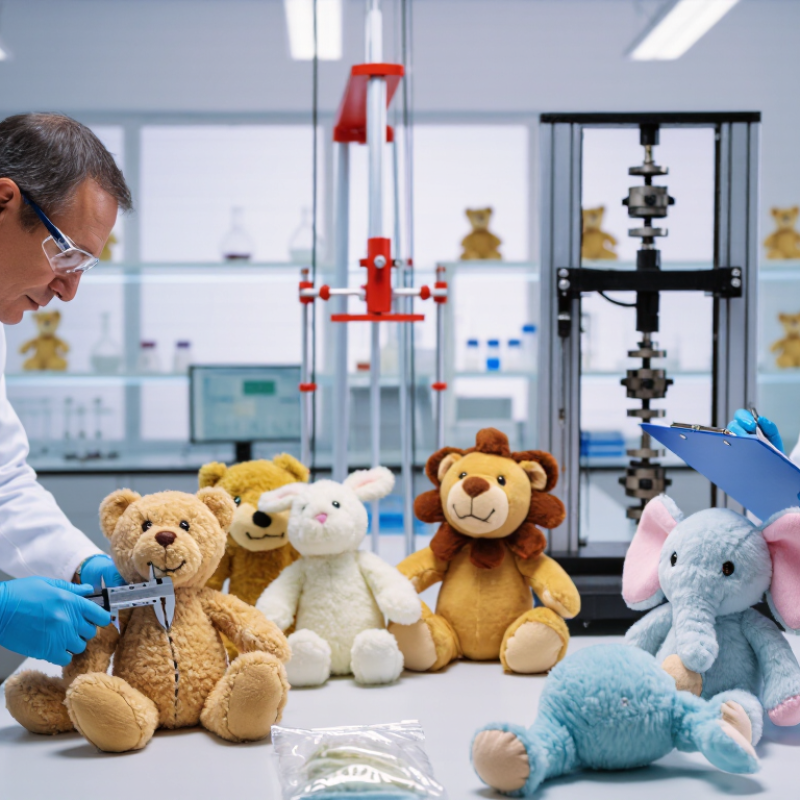
Understanding International Plush Toy Safety Requirements
7 Tips to Meet International Plush Toy Safety Standards
Understanding international plush toy safety requirements starts with the destination market. Common reference frameworks include EN 71, ASTM F963, and ISO 8124. Their details differ, so one test report may not satisfy every country. Confirm the current edition and age grade before production. A soft bear for infants needs tighter controls than a decorative cushion.
Check stitching around seams, eyes, noses, ribbons, and small accessories. Pull testing can reveal parts that appear secure but detach under repeated use. Review fabric and filling for flammability, sharp fragments, and chemical migration. Request material declarations from suppliers, then compare them with laboratory results. Keep batch records, test samples, and production dates together. Clear warning labels should match the toy’s real risks and intended age.
Traceability matters when products move through several factories. Mark cartons and internal records with useful batch codes. Use an independent, qualified laboratory when possible. Test production samples, not only an ideal prototype. That mistake is surprisingly common. Also inspect plush toys after washing, squeezing, and rough handling. Safety can change after use. I would not treat one passed report as permanent proof; standards change, materials vary, and a careful review may uncover weaknesses late.
Choosing Safe Materials and Child-Friendly Components
Safe plush toys begin with materials that remain stable after washing, squeezing, and repeated floor contact. Choose low-shedding polyester or cotton fabric with documented fiber content and colorfastness results. Avoid loose glitter, fragile coatings, and fillings that escape through small seam gaps. Use securely embroidered features instead of detachable plastic eyes, buttons, or beads. Small parts become serious hazards quickly. The European Commission’s 2023 Safety Gate report identified toys as roughly 15% of notified dangerous products, showing why component selection needs evidence.
A responsible supplier should request chemical screening for lead, restricted phthalates, and harmful dyes. Testing should also cover flammability, seam strength, pull resistance, and accessibility of internal stuffing. EN 71, ASTM F963, and ISO 8124 provide useful testing frameworks, but certificates alone do not replace production checks. I have seen samples pass laboratory testing and still fail after rushed stitching changes. That gap deserves attention. Keep production samples from every batch, not only the first approved sample.
Child-friendly design includes washable construction, rounded embroidered details, and no long cords around the neck or limbs. The U.S. Consumer Product Safety Commission reported about 231,000 toy-related emergency department injuries among children in 2023. That figure includes many product types, yet it reinforces a practical lesson: inspect the toy as a child would. Pull the ear. Twist the nose. Wash it twice. If threads loosen, stuffing clumps, or color transfers onto a wet cloth, pause shipment and investigate the material or process.
Designing Plush Toys to Reduce Choking and Physical Hazards
7 Tips to Meet International Plush Toy Safety Standards
Designing Plush Toys to Reduce Choking and Physical Hazards
Tip 1: Control every detachable part.
The CPSC’s Toy-Related Deaths and Injuries report estimated 179,700 emergency-department injuries among children under 15 in 2023, including 11 deaths. Test eyes, noses, ribbons, and decorative buttons after repeated pulling and twisting.
Tip 2: Use a small-parts cylinder during design reviews, not only during final testing.
A cute accessory can become a choking hazard quickly.
Tip 3: Reinforce seams around the neck, arms, and ears.
EN 71-1, ASTM F963, and ISO 8124-1 address mechanical and physical hazards, but passing one test does not replace production control.
Tip 4: Check stuffing retention after abrasion, washing, and drop testing.
Loose fiber filling may create ingestion risks. A stronger thread alone may not solve weak fabric.
Tip 5: Remove long cords and narrow loops near the face or neck.
Tip 6: Inspect hard components for sharp edges, exposed wire, and cracked plastic.
In prototype reviews, the overlooked risk is often a small part hidden beneath fur.
Tip 7: Keep batch records for material certificates, seam tests, and corrective actions.
This paperwork supports traceability, though it cannot replace hands-on inspection. Designers should challenge their own assumptions before shipment.
Applying Testing, Documentation, and Quality Control Procedures
7 Tips to Meet International Plush Toy Safety Standards
Applying Testing, Documentation, and Quality Control Procedures
Safety planning should begin with a written product profile. Record the toy’s age range, fabrics, fillings, dyes, accessories, and intended markets. Requirements can differ by country, so verify current rules before production. Use laboratories with suitable accreditation and clearly defined test methods. Test flammability, accessible parts, seams, stuffing, dyes, and restricted chemicals. Small buttons and plastic eyes deserve special attention. They can become serious hazards after repeated pulling.
Keep a technical file for every product version. Include material declarations, supplier records, laboratory reports, artwork approvals, and corrective actions. Date each document. Link it to a batch number. A missing revision can create confusion during an inspection. It happens easily. Do not treat one passing report as permanent proof. Materials, suppliers, and machines may change without obvious visual differences.
Quality control must continue beyond final inspection. Check incoming fabric, stitching tension, filling weight, loose threads, and attachment strength. Use sample-based checks, but increase inspection when defects rise. Keep sealed samples from each production batch. They help compare complaints with original output. Train inspectors with photographs and physical examples. Review results weekly, not only after a failure. Perfect paperwork cannot repair weak factory controls. A practical system also records mistakes, investigates their causes, and confirms whether corrective actions truly worked.
Maintaining Compliance Across Markets and Product Updates
7 Tips to Meet International Plush Toy Safety Standards
Keeping plush toys compliant across markets requires more than one laboratory report. Standards and product details change. Tip 1: map each market to its applicable rules, such as EN 71, ASTM F963-23, or ISO 8124. Tip 2: maintain a risk file covering loose eyes, stitching, stuffing, dyes, and small detachable parts. A soft surface can hide a serious weakness.
Tip 3: test every material change. A new fabric, thread, filling, or dye can alter flammability and chemical results. Tip 4: preserve batch-level traceability, including supplier codes, production dates, and factory inspection records. Tip 5: use independent laboratories with documented methods and calibrated equipment. The European Commission’s 2023 Safety Gate report recorded 3,412 product alerts, showing why market surveillance cannot be ignored. Toys remained among the frequently reported categories.
Tip 6: review labels and warnings after every design update. Translations, age grading, care instructions, and importer details must remain accurate. Tip 7: monitor complaints and returned products, not only formal test results. A loose seam found after repeated washing deserves investigation. No system is perfect. In practice, teams sometimes approve a familiar material too quickly. That is a useful weakness to examine. Monthly change-control meetings, retained samples, and annual compliance reviews help connect laboratory evidence with real children’s use. Keep evidence ready, not scattered across email folders.
FAQS
Check eyes, noses, ribbons, buttons, and hidden accessories. Pull and twist them repeatedly. Small parts can detach quickly.
Use a small-parts cylinder during design reviews, not only before shipment. A cute accessory may create a serious risk.
Reinforce seams around the neck, arms, and ears. Test them after pulling, washing, abrasion, and drops. Strong thread alone may not fix weak fabric.
Check stuffing retention after washing, abrasion, and drop testing. Loose fibers may escape through tiny fabric openings. Look inside.
Remove long cords and narrow loops near the face or neck. Inspect plastic and wire for cracks, sharp edges, or exposed points.
Record fabrics, fillings, dyes, accessories, age range, markets, suppliers, test reports, and corrective actions. Date every document and link it to a batch.
No. Materials, suppliers, and machines can change without visible differences. Test every important material change. Familiar materials deserve scrutiny too.
Check incoming fabric, stitching tension, filling weight, loose threads, and attachment strength. Keep sealed batch samples. Review results weekly.
Investigate loose seams, detached parts, and washing failures. Compare complaints with retained samples. Perfect paperwork cannot repair weak factory controls.
Recheck labels, warnings, translations, age grading, care instructions, and importer details. Hold regular change-control meetings. Mistakes still happen.
Conclusion
Meeting international plush toy safety standards requires a structured approach from design through production. First, manufacturers should understand the safety requirements of each target market, including rules for materials, flammability, labeling, and age suitability. Choosing non-toxic fabrics, secure stuffing, durable stitching, and child-friendly components can help reduce potential risks. Designs should also avoid small detachable parts, sharp edges, loose threads, and other features that may create choking, entanglement, or physical hazards.
To understand how to ensure plush toys meet international safety standards, producers should establish documented testing and quality control procedures. Each product should be evaluated according to applicable requirements, with records covering material checks, sample testing, production inspections, and corrective actions. Compliance should also be reviewed whenever materials, suppliers, designs, packaging, or manufacturing processes change. Regular audits and consistent documentation help maintain product safety across markets and support reliable updates throughout the toy’s lifecycle.
 Tazz Toy
